What you are practising for
The B2 English test people search for in 2026 is the settlement test: from 26 March 2027 most people applying for indefinite leave to remain on the family route and the work routes need B2 speaking and listening. The test built for that is Trinity's GESE Grade 7, announced for late 2026: 15 minutes, one examiner, three phases. The alternatives on sale today are four-skills exams (Trinity ISE II, IELTS for UKVI at 5.5, LanguageCert Academic or General SELT, PTE Academic UKVI) and their speaking parts test the same B2.
This is not Cambridge First (FCE) practice. Most "B2 practice" on the web is reading and use-of-English exercises for a school exam. The settlement test is spoken, and so is the practice.
What B2 speaking means in practice
The CEFR says a B2 speaker can "interact with a degree of fluency and spontaneity that makes regular interaction with native speakers quite possible", give "clear, detailed descriptions" and "explain a viewpoint on a topical issue giving the advantages and disadvantages of various options". In a Trinity examiner's room that becomes four habits:
- You answer in paragraphs, not sentences. A B1 answer is two sentences and a reason. A B2 answer is an opinion, a reason, an example and a qualification: "I think, because, for instance, although."
- You handle the unexpected. The examiner interrupts, disagrees, asks "why do you say that?" You respond without a reset.
- You lead. At Grade 7 you run the Topic phase and the Interactive phase. The examiner gives a prompt and then waits. Silence is your problem, not theirs.
- You use the Grade 7 grammar without being pushed. Second conditional (if I had more time, I would…), used to, should and ought to, present perfect continuous, relative clauses, reported speech, the passive, and linking words like however, whereas, on the other hand.
The B2 English hub sets a B1 answer against a B2 answer on the same question.
The free AI examiner at B2
SpeakPass runs a four-minute Grade 7 conversation on one of the six Trinity conversation subjects: education, national customs, village and city life, national and local produce and products, early memories, pollution and recycling. The examiner asks Grade 7 questions, pushes back on what you say, and asks for reasons. At the end you get a Trinity-style grade (A to D) for the phase, a breakdown into communication, grammar, vocabulary and pronunciation, the Grade 7 items you used, the ones the examiner invited and you missed, the mistakes with corrections, and a transcript. One session a day without an account, two with a free account; with a free account the first full 15-minute mock is free as well.
The six subjects, each with its own practice:
- Education
- National customs
- Village and city life
- National and local produce and products
- Early memories
- Pollution and recycling
A four-week plan
Most adults with a fresh B1 need six to twelve months to reach a safe B2. Four weeks is for someone who already speaks English every day at work and needs to turn it into exam shape.
Week 1: find out where you are. One subject a day with the AI examiner, six days. Read each report for the grade and the "items missed" list. If you are getting D on most, this plan is too short; see how long from B1 to B2. If you are getting C, carry on.
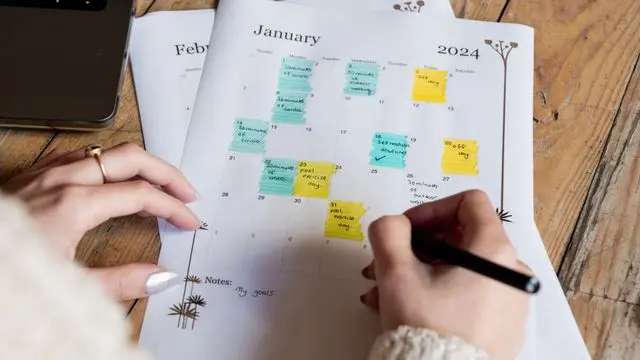
Week 2: length and structure. Every answer this week has four parts: opinion, reason, example, "although" or "on the other hand". Say ten of them a day out loud about anything: the weather, your job, your street. Then one practice session, and check that the report's Grade 7 list includes a conditional and a linking word.
Week 3: lead. Build your Topic Form and talk through each point for a minute with a phone recording, then ask yourself the examiner's follow-up. Practise the Interactive phase with a friend: they read a prompt, you have to keep four minutes going by asking questions. This is the phase most B1-trained candidates fail at Grade 7.
Week 4: pressure. The two hardest subjects again. One full 15-minute mock, timed. Then rest for two days before the exam.
What a C, a B and an A sound like at B2
The same question, Do you think children should learn about recycling at school?
C (pass) Yes, I think so. It's important because the planet has a problem with plastic. If children learn when they are young, they will do it when they are adults. In my country we didn't learn this at school and now people throw everything together.
B (merit) Yes, although I'd say the school can only do part of it. Children should learn why recycling matters, not just which bin to use, because if they understand the reason they'll keep doing it. My daughter's school does a project every year, and she's the one who tells us off at home if we get it wrong. On the other hand, if the parents don't recycle, the lesson doesn't last.
A (distinction) I do, though I'd put it differently: schools should teach children to question where things go, rather than to follow a chart. When my son was seven he asked me what happened to the bottles after the lorry took them, and I didn't know. We looked it up together, and I'd argue that one conversation did more than the posters on the classroom wall. Having said that, I used to think it was the council's job, so I'm hardly in a position to lecture anyone. What do schools here actually teach about it?
The C answers the question with a reason and a conditional; it passes. The B adds a qualification (although, on the other hand), a should with a reason, and a real example. The A has a story, reported speech, used to, and a question back that opens the discussion. None of the three uses rare vocabulary. The difference is organisation and the willingness to say something arguable.
Mistakes the report catches most often at B2
- A B1 answer to a B2 question: facts and a reason, no opinion, no "although". Add the other side every time.
- If I would have → If I had. If I will → If I.
- I am used to live → I used to live (past habit) or I am used to living (familiarity).
- Despite of → despite or in spite of.
- Letting the examiner lead the Interactive phase. After the prompt, ask the first question yourself.
- No question back in the Topic phase. At Grade 7 you must ask the examiner at least one.
Free practice that is not an app
Talk to the radio. BBC Radio 4 and 5 Live are full of people giving opinions with reasons; pause and answer them out loud, with "although". Record one minute a day on your phone about something in the news and listen back for the four parts. Join a local conversation class if your college runs one. And use the AI examiner for the thing none of those can do: a graded report with the Grade 7 items listed, so you can see the gap closing week by week.